🥞 Pesarattu Recipe
Authentic Andhra-Style Green Gram Dosa
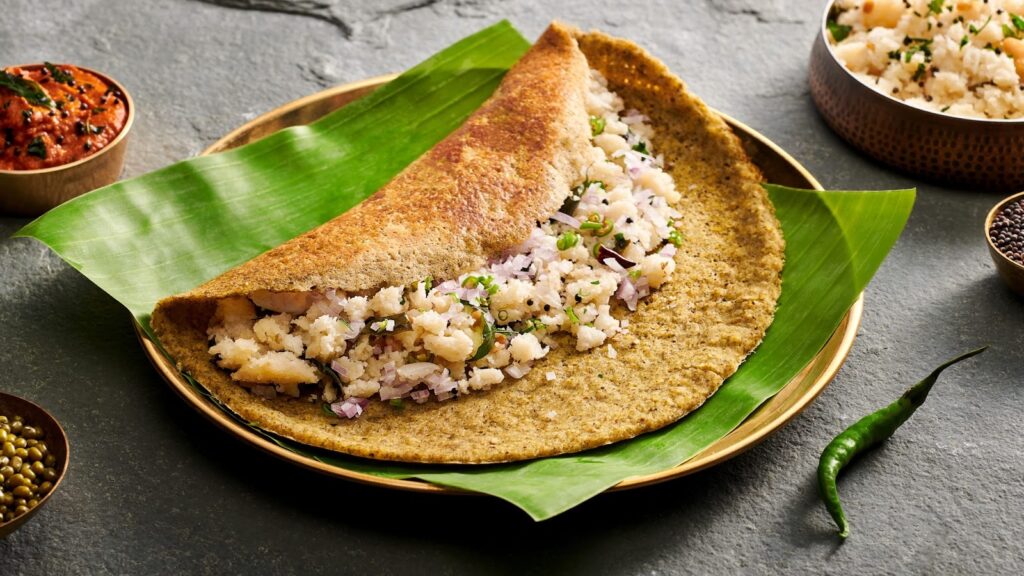
Pesarattu is a traditional breakfast delicacy from the states of Andhra Pradesh and Telangana. Unlike regular dosa made from rice and urad dal, Pesarattu is prepared using whole green gram (moong dal), making it a protein-rich, nutritious, and wholesome dish. Crisp on the outside and soft inside, this savory crepe is typically served with ginger chutney and sometimes paired with upma — famously known as MLA Pesarattu.
This dish is not only delicious but also healthy, gluten-free, and easy to prepare. Let’s explore everything about this iconic South Indian recipe — from ingredients and preparation to tips, variations, and serving suggestions.
🌿 What is Pesarattu?
The word Pesarattu comes from two Telugu words:
- “Pesara” meaning green gram (moong dal)
- “Attu” meaning dosa or crepe
It is a traditional Andhra-style dosa made by soaking whole green gram and grinding it into a smooth batter with spices. Unlike regular dosa batter, it does not require fermentation, which makes it quick and convenient.
🥣 Ingredients Required
the Pesarattu Batter:
- 1 cup whole green gram (moong dal)
- 2 tablespoons raw rice (optional, for crispiness)
- 1–2 green chilies
- 1-inch ginger piece
- ½ teaspoon cumin seeds
- Salt to taste
- Water as needed
Topping:
- Finely chopped onions
- Finely chopped green chilies
- Chopped coriander leaves
- Optional: grated carrot
Cooking:
- Oil or ghee as required
👩🍳 Step-by-Step Preparation
Step 1: Soaking the Moong Dal
Wash the whole green gram thoroughly 2–3 times. Soak it along with raw rice for about 4–6 hours or overnight. Soaking softens the dal and helps in smooth grinding.
Step 2: Grinding the Batter
Drain the soaked dal and transfer it to a blender. Add:
- Green chilies
- Ginger
- Cumin seeds
- Salt
Grind into a smooth batter by adding water gradually. The consistency should be similar to dosa batter — not too thick and not too watery.
Unlike traditional dosa batter, Pesarattu batter does not require fermentation. You can use it immediately.
Step 3: Preparing the Tava
Heat a flat dosa pan (tava) on medium flame. Once hot, sprinkle a few drops of water. If it sizzles, the pan is ready.
Lightly grease the pan with oil.
Step 4: Making the Pesarattu
- Pour a ladle full of batter at the center.
- Spread it in circular motion like dosa.
- Sprinkle chopped onions, green chilies, and coriander on top.
- Drizzle oil around the edges.
- Cook on medium flame until the bottom turns golden and crisp.
Flip if desired, though traditionally it is cooked only on one side.
Fold and serve hot.
🍽️ MLA Pesarattu – A Popular Variation
One famous variation is MLA Pesarattu, popular in Andhra restaurants. It includes a layer of upma placed inside the Pesarattu before folding.
Legend says this dish became popular when legislators (MLAs) in Andhra Pradesh Assembly preferred this filling breakfast.
To prepare MLA Pesarattu:
- Prepare regular Pesarattu.
- Place 2–3 tablespoons of upma in the center.
- Fold and serve with ginger chutney.
🥗 Nutritional Benefits of Pesarattu
Pesarattu is considered a healthy breakfast option due to its high nutritional value:
✔ Rich in Protein
Green gram is an excellent plant-based protein source, ideal for vegetarians.
✔ High in Fiber
Improves digestion and keeps you full longer.
✔ Low in Calories
Perfect for weight management diets.
✔ Diabetic-Friendly
Low glycemic index helps regulate blood sugar levels.
✔ Gluten-Free
Suitable for people with gluten intolerance.
🌶️ Best Side Dishes for Pesarattu
Traditionally, Pesarattu is served with:
- Ginger chutney (Allam Pachadi)
- Coconut chutney
- Peanut chutney
- Sambar (optional)
The spicy ginger chutney enhances the earthy flavor of moong dal beautifully.
🔄 Variations of Pesarattu
1. Plain Pesarattu
Basic version without toppings.
2. Onion Pesarattu
Topped generously with chopped onions.
3. Upma Pesarattu
Stuffed with semolina upma.
4. Sprouted Moong Pesarattu
Made using sprouted green gram for extra nutrition.
5. Instant Pesarattu
Prepared using moong dal flour if short on time.
🧑🍳 Expert Tips for Perfect Pesarattu
✔ Soak dal at least 4 hours for smooth texture.
✔ Do not ferment batter.
✔ Use a cast-iron tava for authentic crispiness.
✔ Spread batter thin for crispy texture.
✔ Cook on medium flame to avoid burning.
✔ Add rice for extra crispiness (optional).
🕒 Preparation & Cooking Time
- Soaking Time: 4–6 hours
- Grinding Time: 10 minutes
- Cooking Time: 15–20 minutes
- Total Active Time: 30 minutes
🍛 When is Pesarattu Served?
In Andhra households, Pesarattu is commonly served:
- As breakfast
- As evening tiffin
- During special gatherings
- At traditional events
It is especially popular in coastal Andhra regions.
🌍 Cultural Significance
Pesarattu holds a special place in Telugu cuisine. It represents the simplicity and health-conscious cooking style of Andhra homes. While dosa and idli are popular across South India, Pesarattu uniquely symbolizes Andhra culinary identity.
Street vendors in cities like Vijayawada and Hyderabad often serve hot MLA Pesarattu with spicy ginger chutney, attracting long queues of food lovers.